ESSAY
A Room for Building
Before the Work
Before I knew what I would make, I knew I needed a different place to make it.
The sabbatical arrived without a blueprint.
No product plan. No next role. No ambition I could safely name yet.
Only the quiet certainty that whatever came next could not be built inside the container I had just left.
I had learned this once before:
creation does not begin with output.
It begins with conditions.
So before I touched the work, I changed the space.
The Room
The loft had been there all along —
a third-floor room tucked behind our rooftop deck, unused, unclaimed.
It wasn’t an office.
It felt closer to an artist’s studio.
A place meant for making, not managing.
There was something important about using a part of the home for the first time.
Not acquiring. Not upgrading.
Reclaiming.
It had no character, so I gave it one.
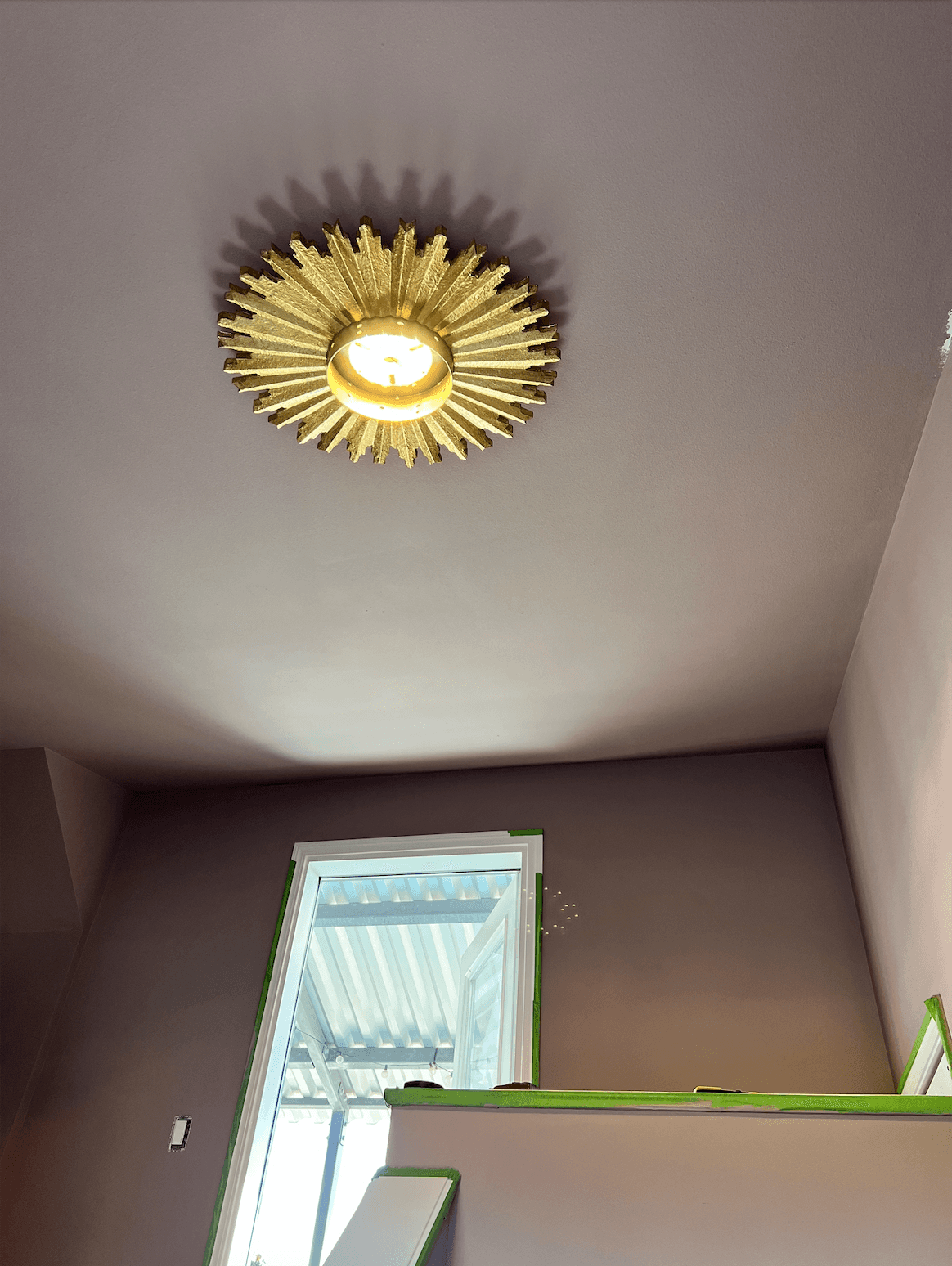
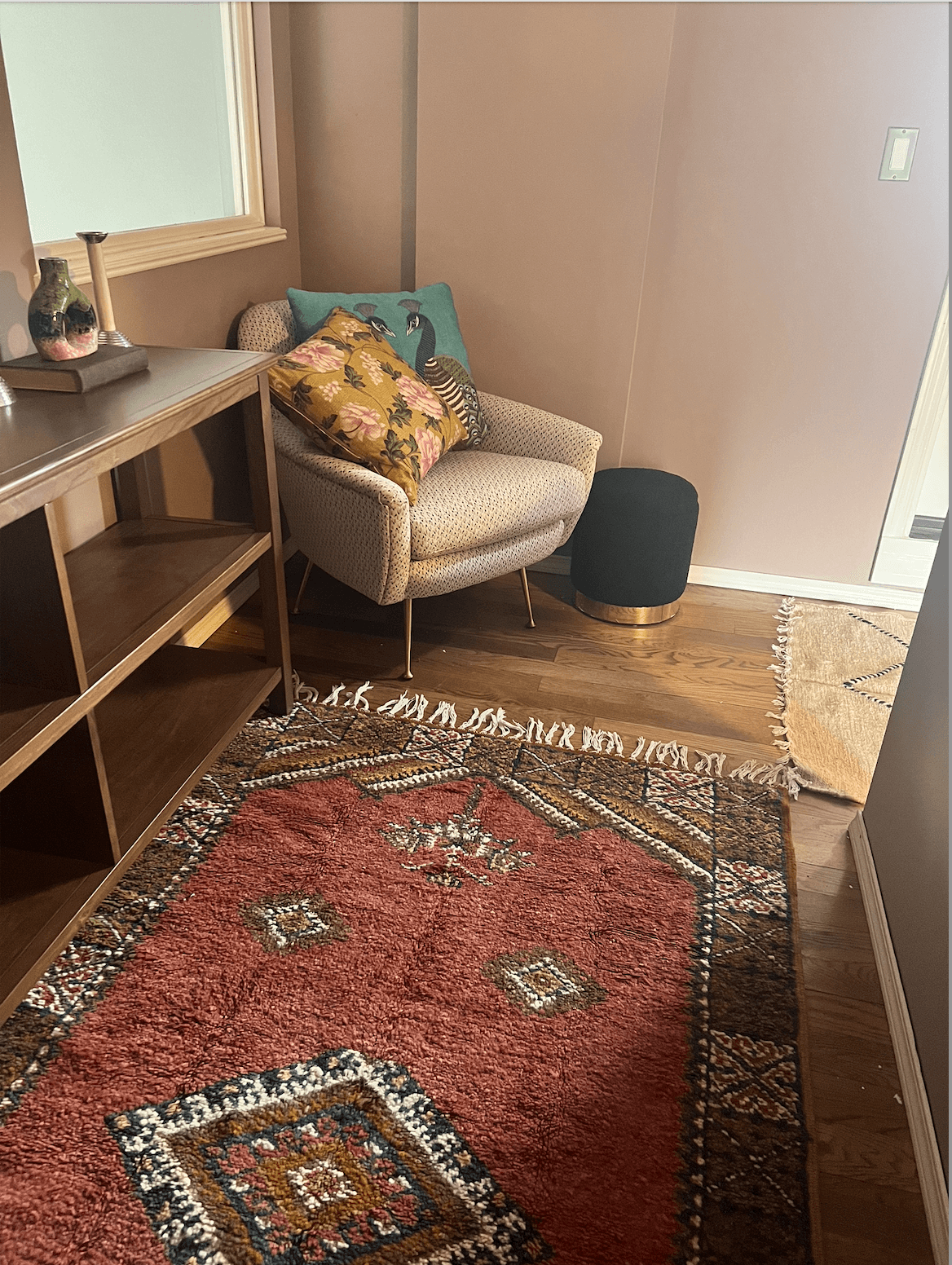
I painted it sulking room pink.
I loved the color, but I loved the history more.
Traditionally, a sulking room was a place women could retreat to —
not to perform recovery,
not to explain themselves,
just to exist without being useful.
The room isn’t finished.
It isn’t meant to be.
I add to it slowly, as the work earns it.
What Lives There
The studio is warm without being precious.
Moroccan rugs I brought back from Marrakesh soften the floor.
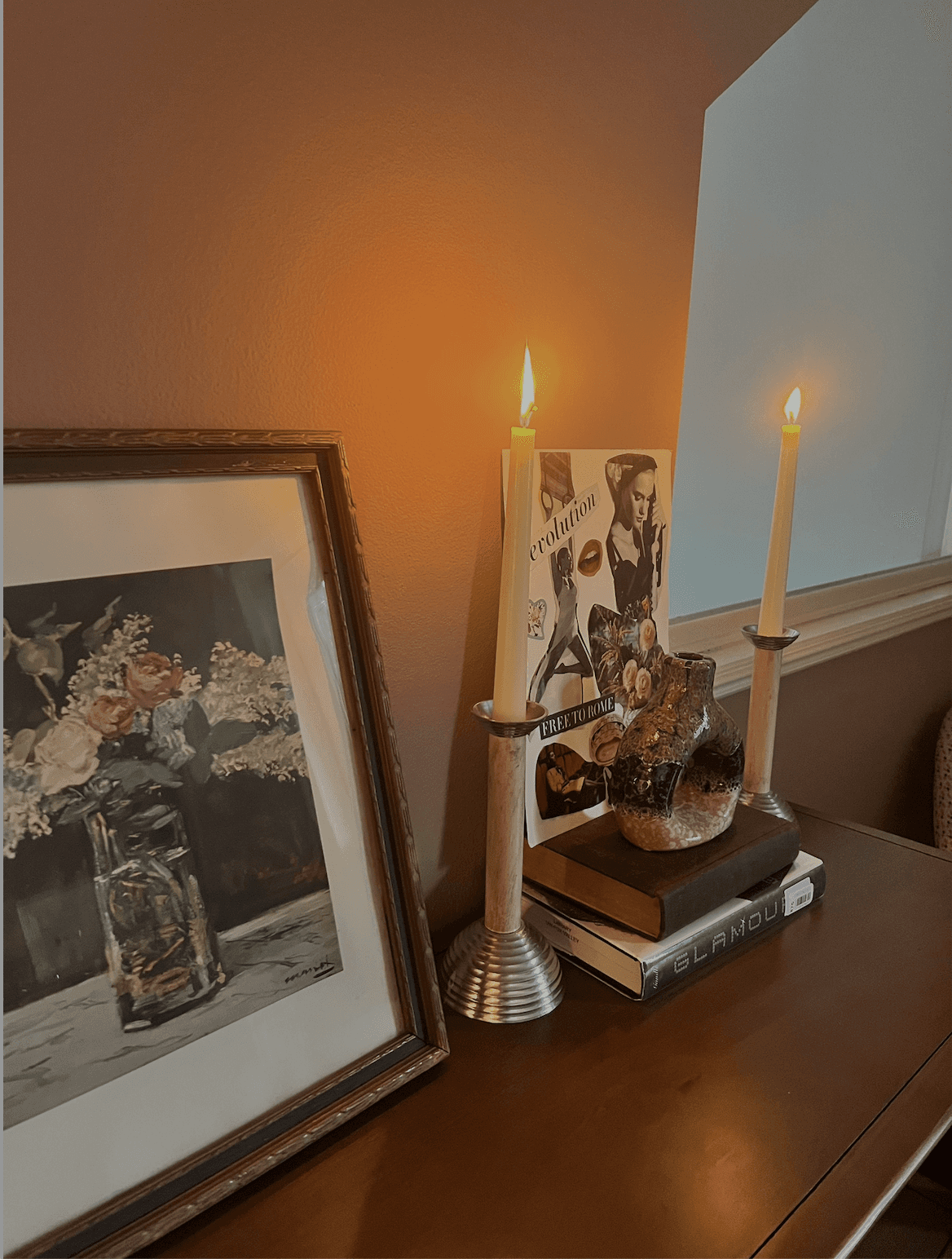
Art from Orcas Island — one of my favorite places to disappear — anchors the walls.
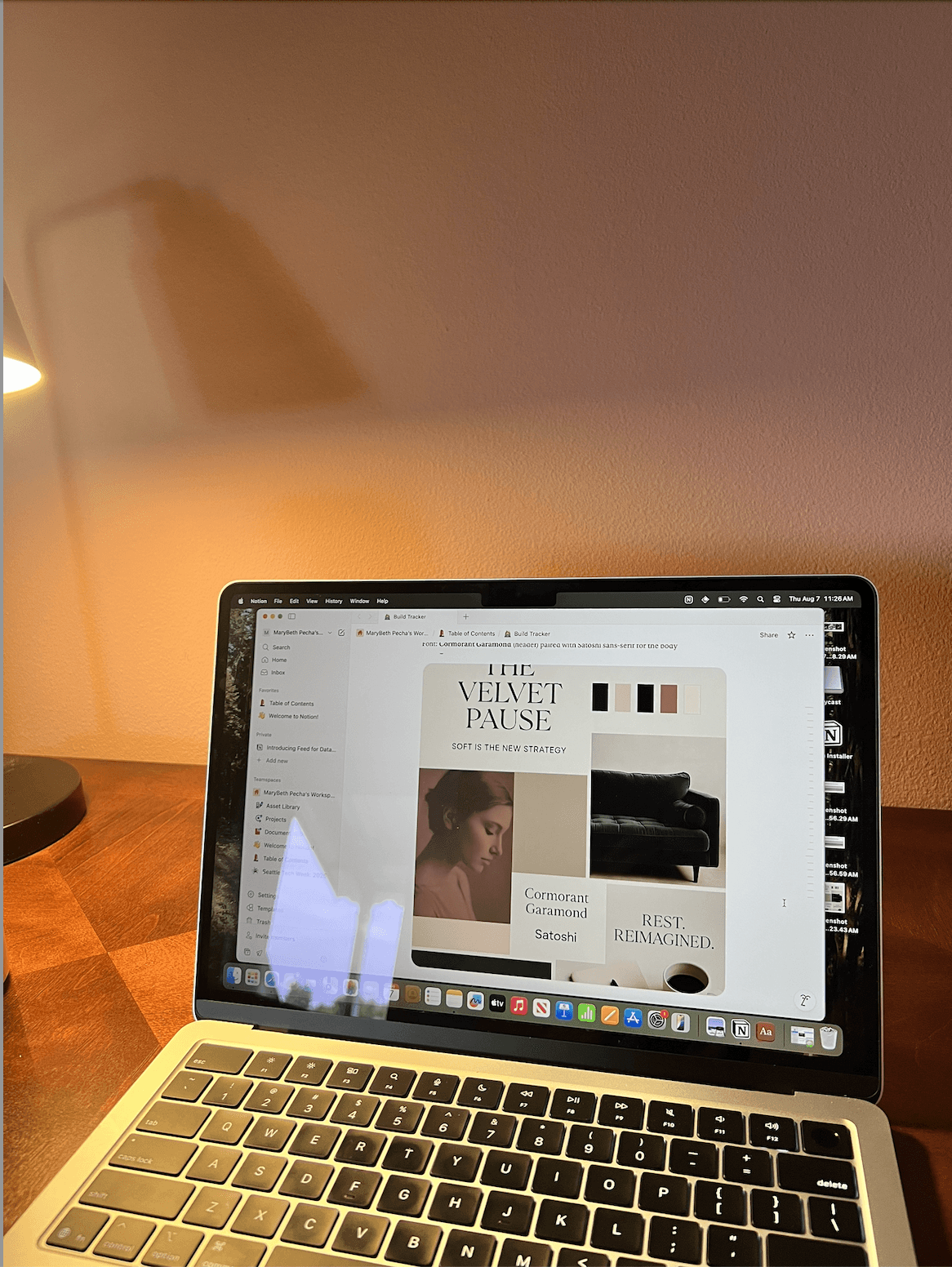
A moodboard.
Books that shaped my sabbatical.
Soft lighting.
Candles.
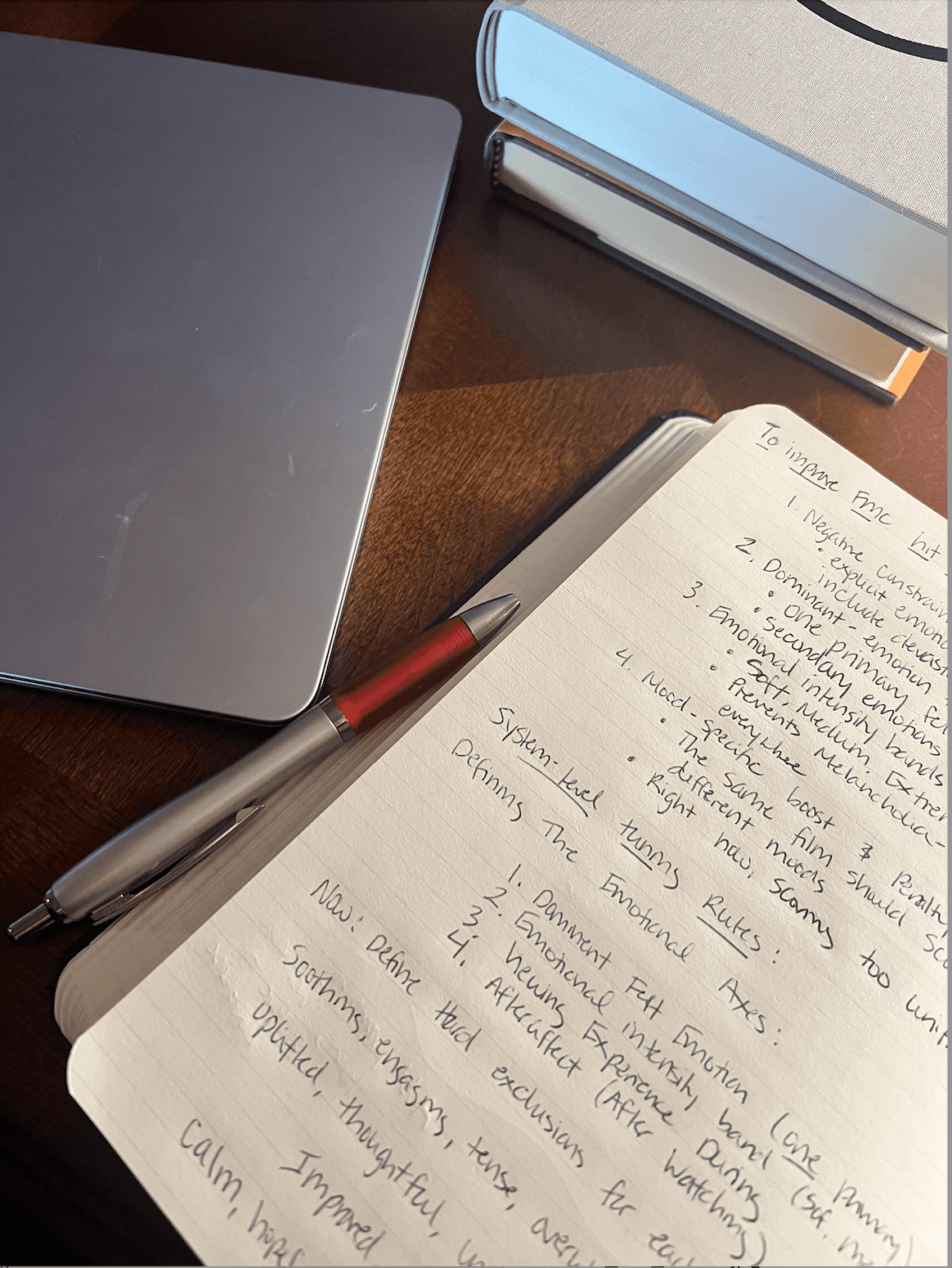
At the center, a simple desk.
Uncluttered.
Clear enough for thinking.
When I walk up the stairs, they creak.
On rainy days, I hear drops hit the metal rooftop deck.
On clear ones, I can see Mount Rainier in the distance and the city below.
The space does something subtle but profound.
It changes my energy the moment I enter.
It feels like mine.
Studio Practice
Most days, the work happens in quiet, bounded hours.
Fifteen to twenty-five a week.
Not more.
I protect that time carefully — not out of preciousness, but respect.
I’ve learned that excellence can’t be rushed,
and that truly new things don’t submit to rigid timelines.
The work comes in blocks:
an hour, an hour and a half at most.
Three or four hours in a day, notifications off, no ambient pull.
I light a candle.
Choose a focus playlist — jazz, classical, lo-fi, depending on the work.
A few drops of lavender on my wrists to settle my attention.
I read a page or two from something that reminds me what good thinking feels like.
Then I begin.
The conditions do the heavy lifting.
They create the soil so I don’t have to force anything.
My only obligation once I’m there is the bar — and the bar is high.
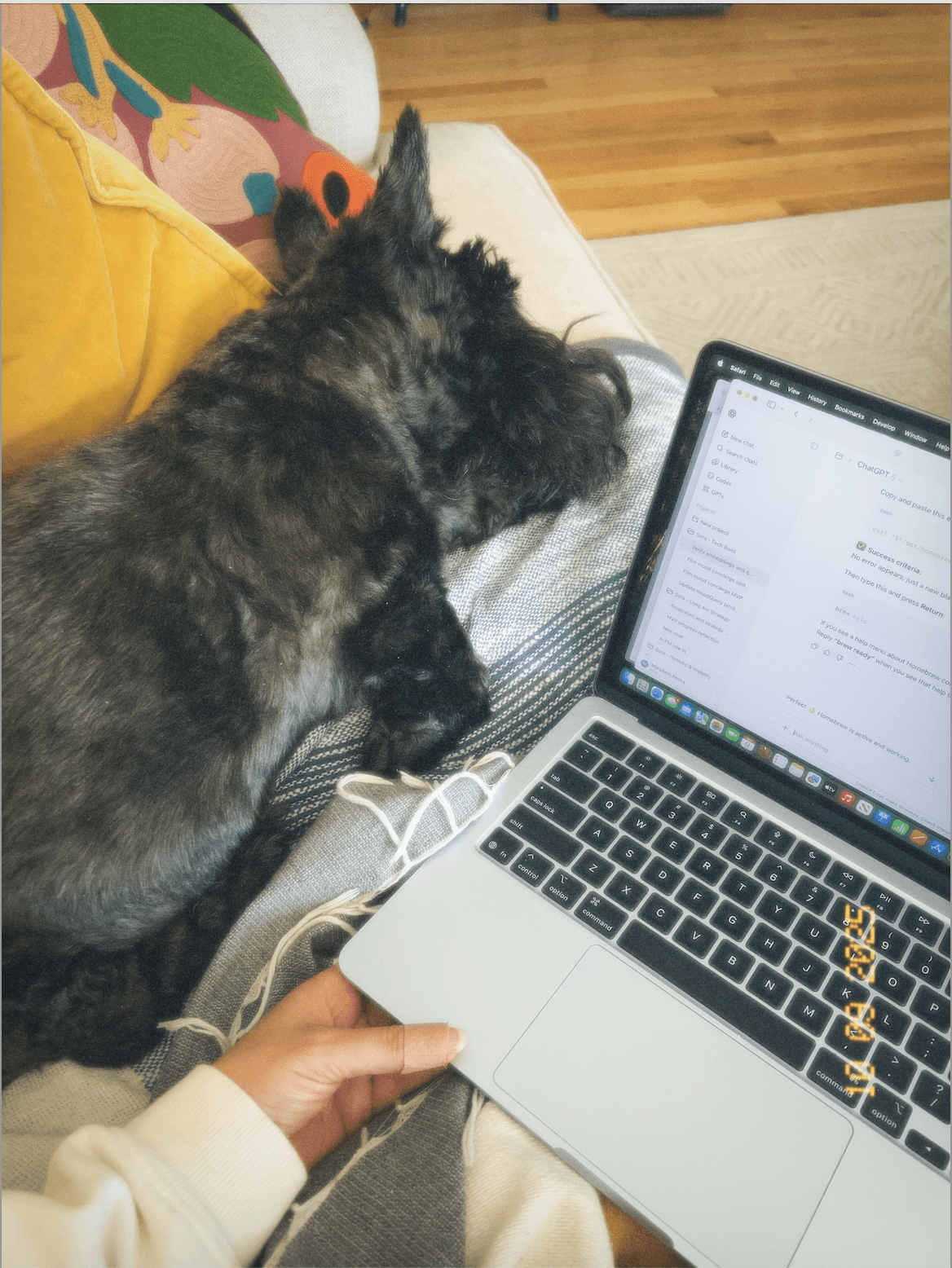
Most of the work happens in the studio.
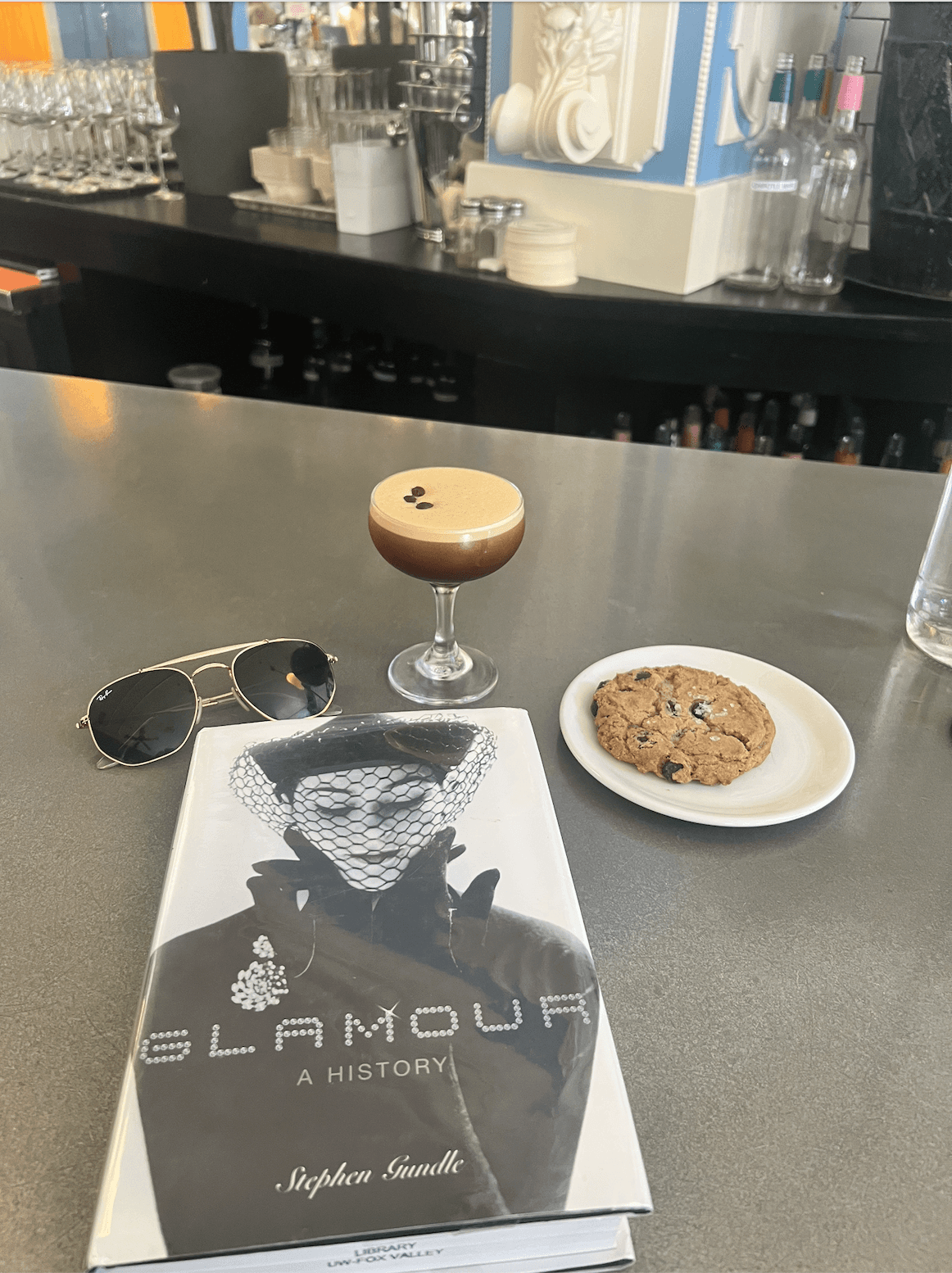
Sometimes it wants a change of scenery — a coffee shop, another room, the quiet hum of people nearby.
Seattle makes this easy.
I don’t rush it.
The work becomes true when it’s ready.
Shared Lineage
Ideas don’t always arrive at the desk.
Sometimes they surface on walks.
Sometimes while reading in bed.
Sometimes while moving through someone else’s sentences.
The idea for The Sulking Room arrived that way.
I had been reading about creative habits — how artists across history structured their lives.
I came across Sylvia Plath, then followed the thread into her poetry.
For a moment, it felt like recognition across time.
That strange intimacy you feel when a work of art sees something in you before you’ve named it yourself.
That moment stayed with me.
We know that feeling well —
standing in a museum, alone in a studio,
or reading a book that understands you more precisely than the people around you.
Art has always done that.
It meets you where you are.
It doesn’t rush you.
It doesn’t ask you to perform clarity before you’re ready.
The question that arrived wasn’t abstract.
It was practical.
What if that experience —
that sense of being seen,
of shared lineage across time —
could exist inside a new medium?
What if the interface wasn’t urgency, but attunement?
What if AI could behave less like a machine demanding inputs,
and more like a quiet room that understands state?
That became The Sulking Room:
a digital space modeled after the oldest creative technologies we have —
books, studios, art —
where the system doesn’t lead with answers,
but with recognition.
I didn’t rush the idea.
I followed it carefully.
Reading remains central to how I think.
Thirty to fifty books a year, fiction and non-fiction, without hierarchy.
In a distracted world, books still teach the mind how to hold complexity.
They still allow you to disappear long enough to return with something intact.
I guard my energy deliberately now.
Sleep is non-negotiable.
Eight hours minimum, no alarm.
Movement every day — weights, walks, stretching, sometimes yoga.
Midday walks with music are a reset.
On my Peloton, Cody rides make me laugh out loud — fully present, fully human.
These aren’t indulgences.
They’re how I keep the instrument in tune.
The studio is still evolving.
I add to it slowly.
Only what belongs.
It isn’t a reveal.
It isn’t a finished thing.
It’s simply the room where the work is allowed to take the time it needs.
The door closes.
The window stays open.
This is where I build.
On space, attention, and the conditions for creating