CASE STUDY
Catching Dreams in the Liminal
Designing the Velvet Pause — a dream catcher redefining what it means for ambitious women to rest
Every ambitious woman eventually meets the moment when movement stops working. The world still rewards speed, certainty, and output — but at some point, achievement begins to
silence its own spark.
The Velvet Pause began as a design experiment in stillness and became a digital dream catcher. A cinematic, interactive companion for ambitious women who choose to slow down without
losing their edge. It reframes pausing not as weakness, but as the most intelligent act of power.
At its core, it asks a quiet but revolutionary question:
What if technology made space for the feminine?
Seventeen years in high-growth systems had taught me how to optimize everything: time, output, performance. I’d mastered efficiency, but lost contact with creativity. The pace that built my
career no longer sustained my curiosity.
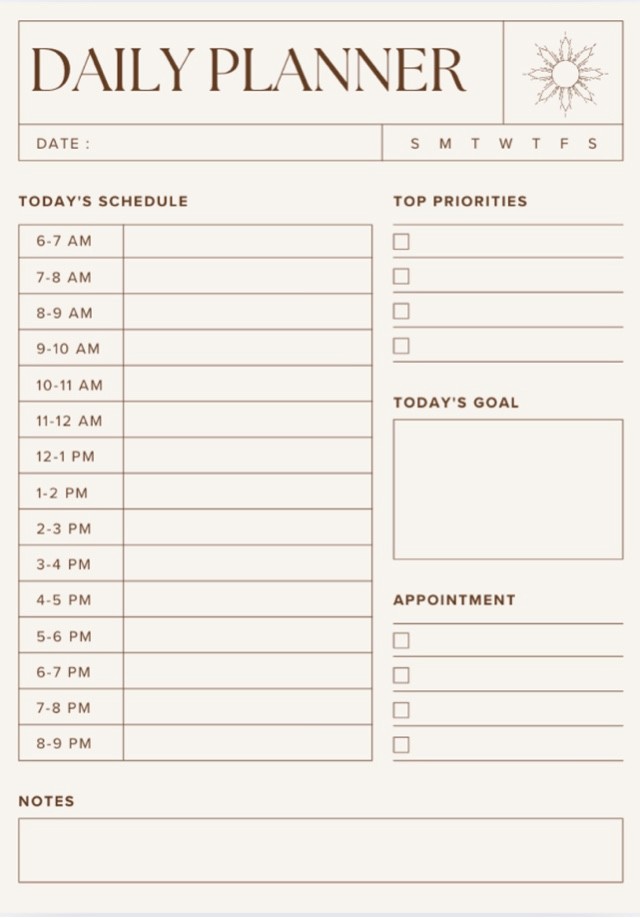
Culturally, I wasn’t alone. The professional world still conflates motion with value. It celebrates what can be tracked and measured, while the invisible: rest, imagination, emotion — remains undervalued. The market mirrors that bias: planners, habit trackers, and wellness apps all promise control, but few legitimize unstructured time as intelligence. Even “self-care” tools frame rest as recovery, not as raw material for innovation.
The Velvet Pause emerged as a counterpoint. Not another productivity system, but a cultural artifact. Technology designed to legitimize softness, curiosity, and wonder. It treats stillness as strategy and reclaims feminine energy as a driver of creativity and discernment.
The timing felt inevitable. Burnout had become the default tempo. Millennial women were quietly questioning the scripts of “lean in” and “do more.” Gen Z was rejecting them outright.
Beneath the performance of success, there was a hunger for something gentler, deeper, more alive.
That whitespace, between ambition and meaning, became the birthplace of The Velvet Pause.
Goal
Build a cinematic MVP that guides women through financial and emotional permission to pause, transforming rest from indulgence into strategic clarity.
Success Metric
A working prototype that feels inspiring, intuitive, and emotionally resonant to early testers.
Hypotheses
— Pairing financial realism with emotional reflection will make pausing feel viable, not reckless.
— A soft, editorial aesthetic will unlock deeper dreaming than a corporate interface ever could.
— Users will connect more deeply with a product that whispers than one that instructs.
Ultimately, The Velvet Pause became a reframing experiment: from planning to permission, from productivity to possibility.
The product had to feel unlike anything in the productivity category. Every decision was filtered through one question: does this invite stillness or resist it?
Creative Direction
The Velvet Pause was conceived as a liminal experience — five cinematic “chapters” that guide users through reflection, financial awareness, and imagination. The rhythm is slow and deliberate, mirroring breath rather than scroll. It functions as an anti-productivity tool: no timers, no dashboards, no streaks. Only space.
Design & Craft
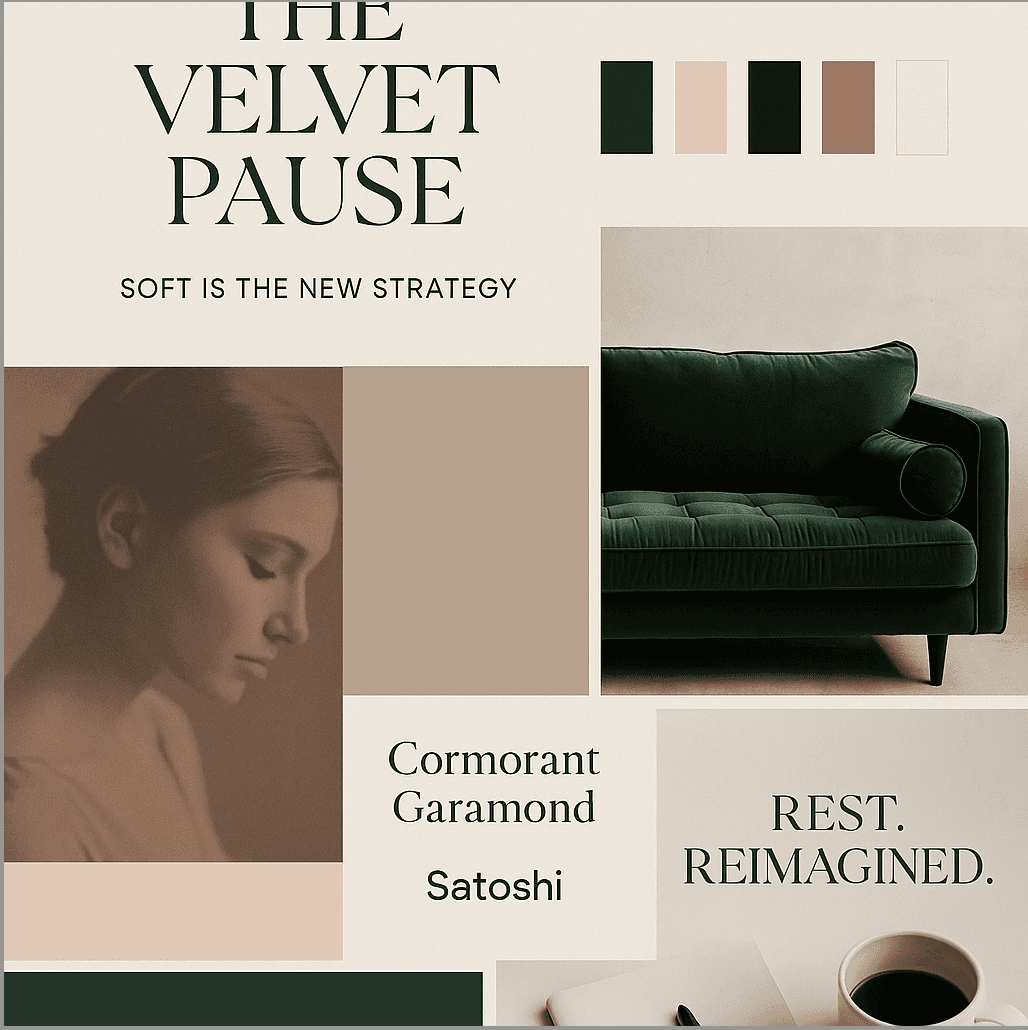
Reflection prompts read like a trusted guide, not a task list. The interface borrows from glamour and fashion more than software: Cormorant Garamond type, velvet-inspired palette, intentional
whitespace, and imagery drawn from my own pause. The goal was to make rest look aspirational; to treat feminine aesthetics as authority, not accessory.
Process & Tools
I built The Velvet Pause solo in Framer, choosing aesthetic fidelity over scale. Every screen, animation, and line of copy was handcrafted to preserve tone. The absence of a CMS was
intentional; the story needed to be felt, not fetched. The friction of that process became part of the artistry.
One cinematic “wow” moment anchors the experience: when users describe how they want Sundays to feel in the re-emergence chapter, the final screen mirrors it back: a gentle emotional climax, allowing the user to exhale softly “maybe this could be my life.” The rest of the product remains quiet, minimalist, human.
Reinventing mobile: not a Breakpoint, a Second World
As I approached the mobile experience, it became clear that conventional Framer breakpoints would break the spell, and with a product built on emotional resonance, breaking the spell
wasn’t an option. The Velvet Pause wasn’t meant to shrink; it was meant to transform. Desktop carried a quiet, cinematic stillness — but when translated literally, it felt like a reduced version of itself, a smaller echo of the same world. That compromised the integrity of the experience.
So I abandoned breakpoints entirely.
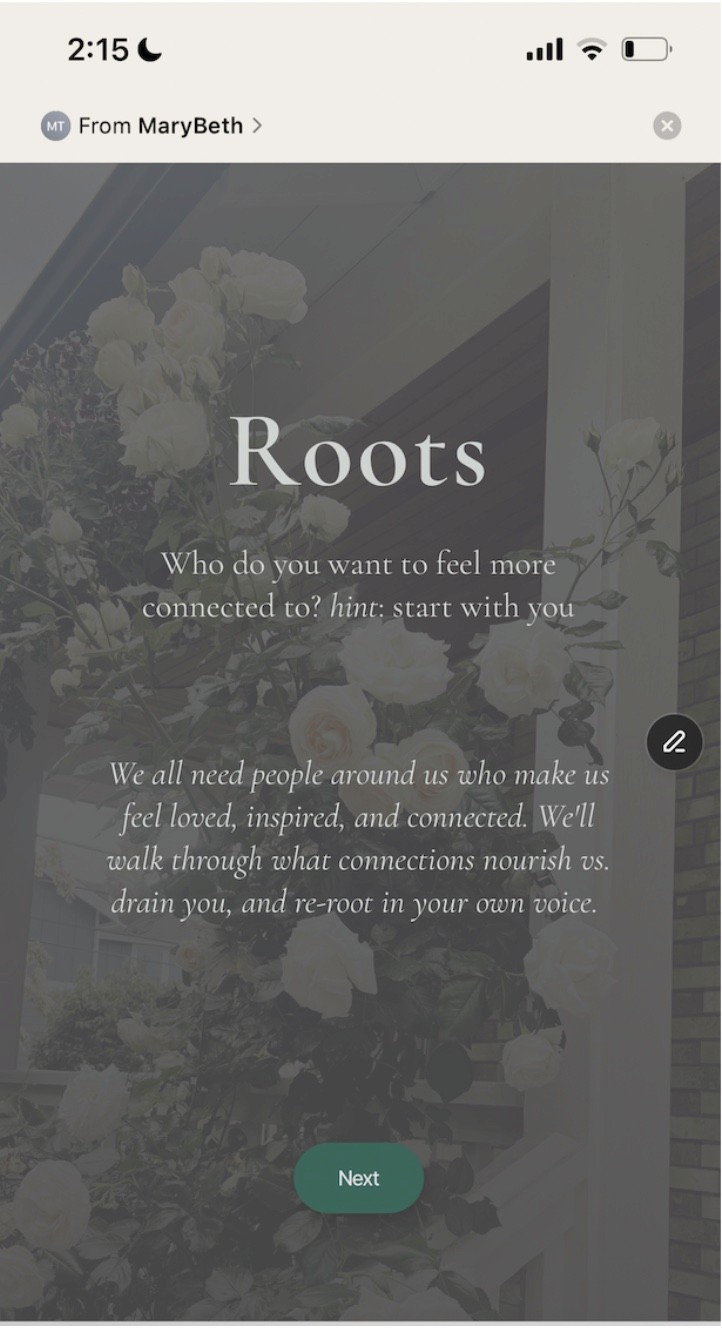
Instead, I built mobile as its own fully cinematic interface, crafted from the ground up. Not reused layouts, not scaled-down typography; an entirely new visual vocabulary that honored the intimacy of a phone held in one’s hand.
Mobile became:
— Bolder typography, closer and more personal
— Vertical editorial layouts that read like a pocket-sized magazine
— A new constellation of backgrounds designed to feel immersive, not decorative
— A rhythm calibrated to thumb-scrolling instead of desktop drift
The goal was simple:
Do not break the world. Deepen it.
By treating mobile as a parallel universe — not a derivative one — the product retained its spell: cinematic, feminine, and emotionally resonant in both forms. The design decision wasn’t just aesthetic; it was philosophical. Rest deserves a world built with intention, not adaptation.
This became one of the most important creative choices of the entire product.
The Velvet Pause legitimizes rest as strategy. It doesn’t track, time, or measure; it invites reflection as creative fuel. In a world that celebrates optimization, it dares to make softness aspirational.
Its tone borrows from art and fashion: sensual color, editorial rhythm, cinematic typography. Because if rest is going to compete with hustle, it has to look as powerful.
This project also became personal. During my own sabbatical, people often joked that I was “doing nothing” or “living off my husband.” Those moments reinforced why this tool needed to
exist. Our culture still confuses stillness with stagnation and curiosity with indulgence. The Velvet Pause exists to rewrite that script. It signals that reflection isn’t retreat. It’s foresight.
The first MVP was delivered in four weeks: a fully interactive prototype guiding users through five cinematic scenes. The experience felt like a storybook, not a spreadsheet — and users noticed.
Early feedback called it “refreshing,” “intuitive,” and “empowering.” The next button became a highlight, creating a trance-like flow that helped users move through the experience with ease. The resonance validated the concept: users were ready for tools that meet their emotional, not just functional, needs.
Feedback also revealed the cultural gap this product addresses. Many testers were unsure how to inhabit stillness — uncertain whether to type, write, or simply think. That insight became crucial:
even in rest, people crave clarity. Designing for stillness requires more structure, not less.
Building The Velvet Pause confirmed that emotional design is not ornamentation. It’s architecture. The product’s success didn’t come from its logic loops but from its tone, pacing, and softness. Those qualities created resonance, which is rarer and more valuable than
engagement.
I learned that legitimizing unstructured time requires both cultural reframing and functional design. You can’t simply give people space; you must teach them how to feel safe inside it.
Future iterations will integrate AI-driven reflection prompts that respond to mood, deepening personalization without losing humanity. But the principle remains: technology can be ambitious
without being extractive.
The Velvet Pause redefined how I think about product design. Tools shouldn’t just make us faster. They should make us more human. When technology learns to honor rhythm over resistance, progress doesn’t stop. It deepens.
This project became proof that beauty, intelligence, and feminine power can coexist by design. It marked the first chapter in the world I’m building, where innovation feels inevitable because it is human.
The Question
The Cultural Gap
The Velvet Pause Moodboard
Example of typical planner in the market
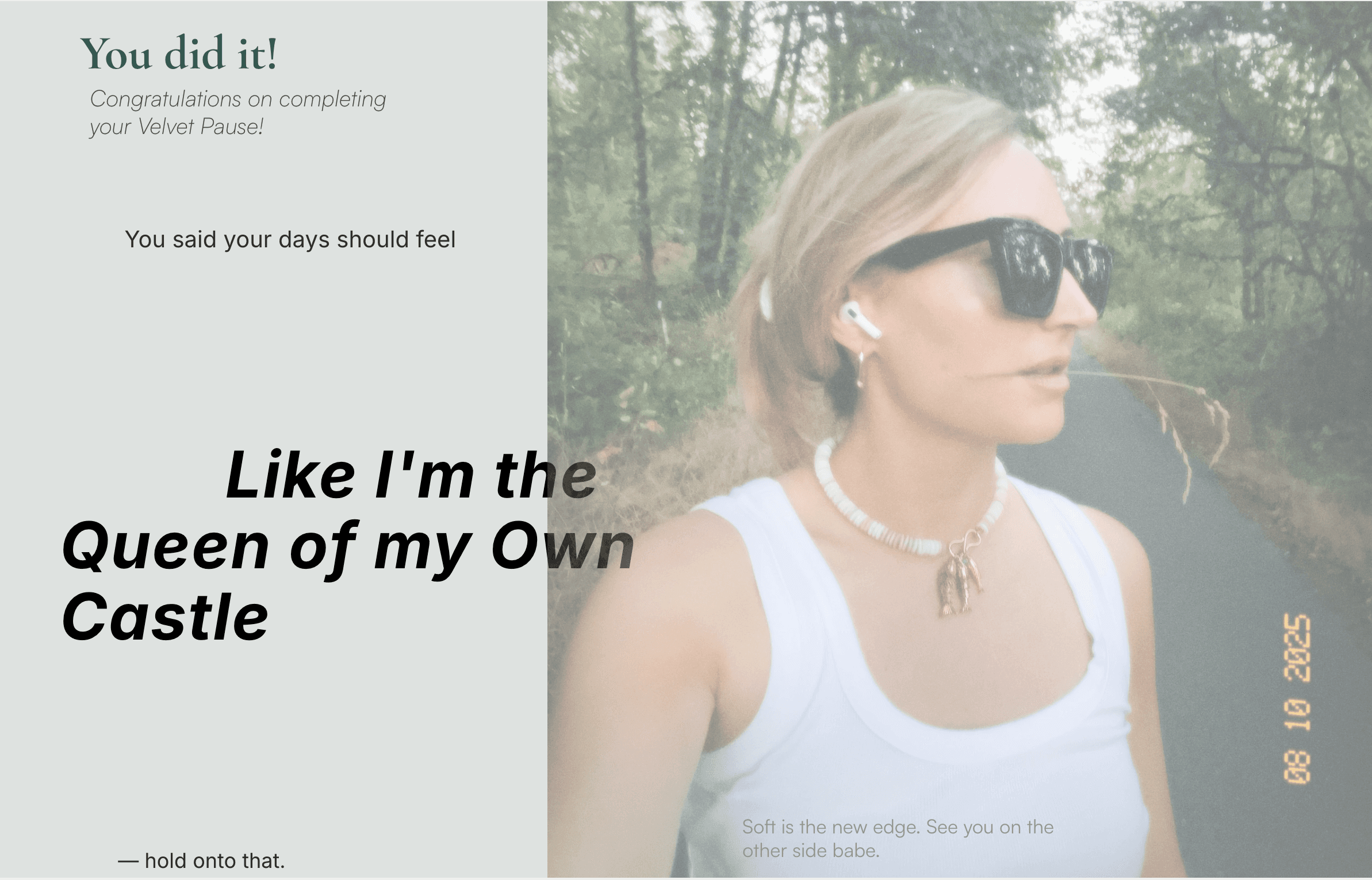
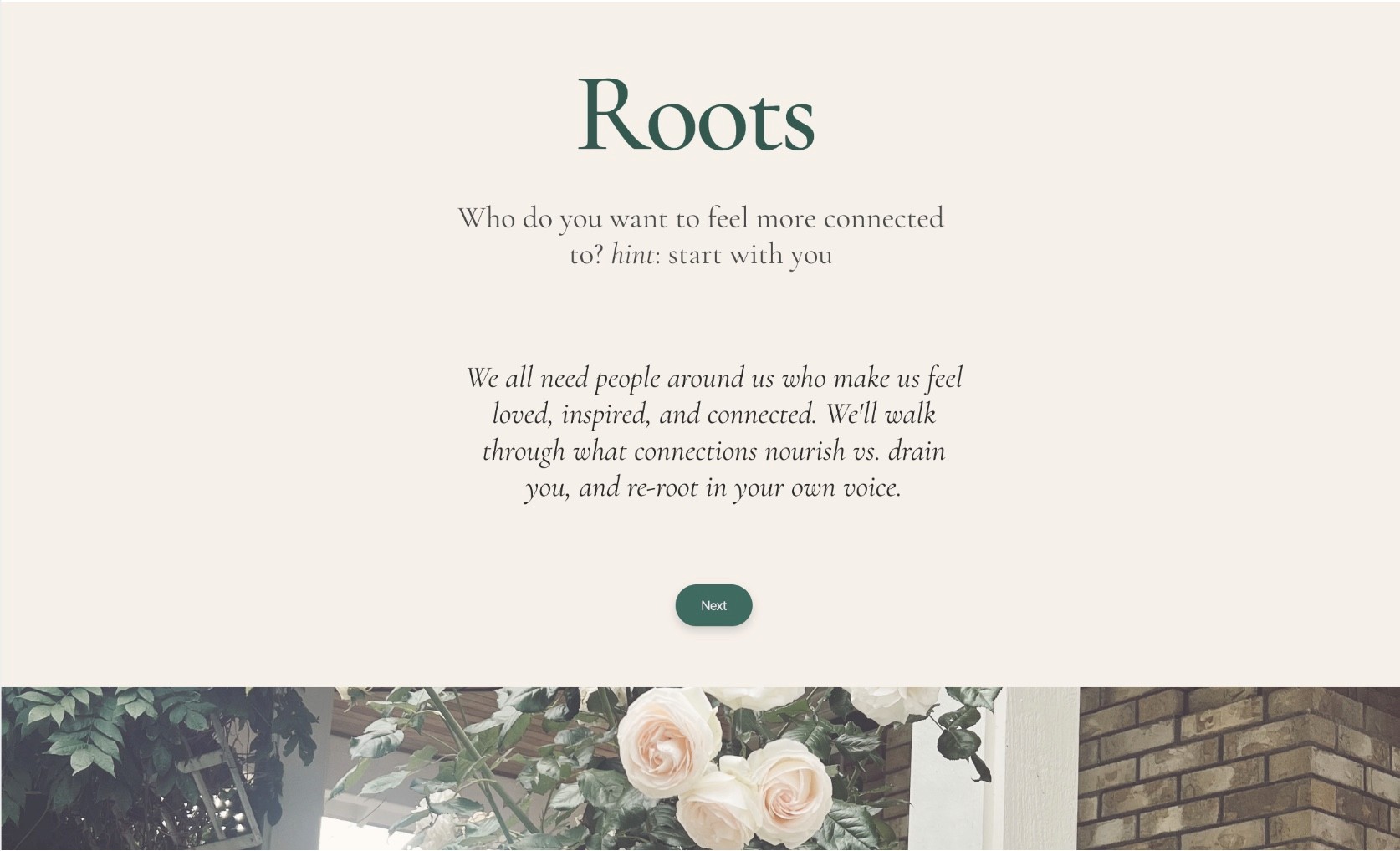
Screenshot from The Velvet Pause
Screenshot from mobile experience
Screenshot from The Velvet Pause
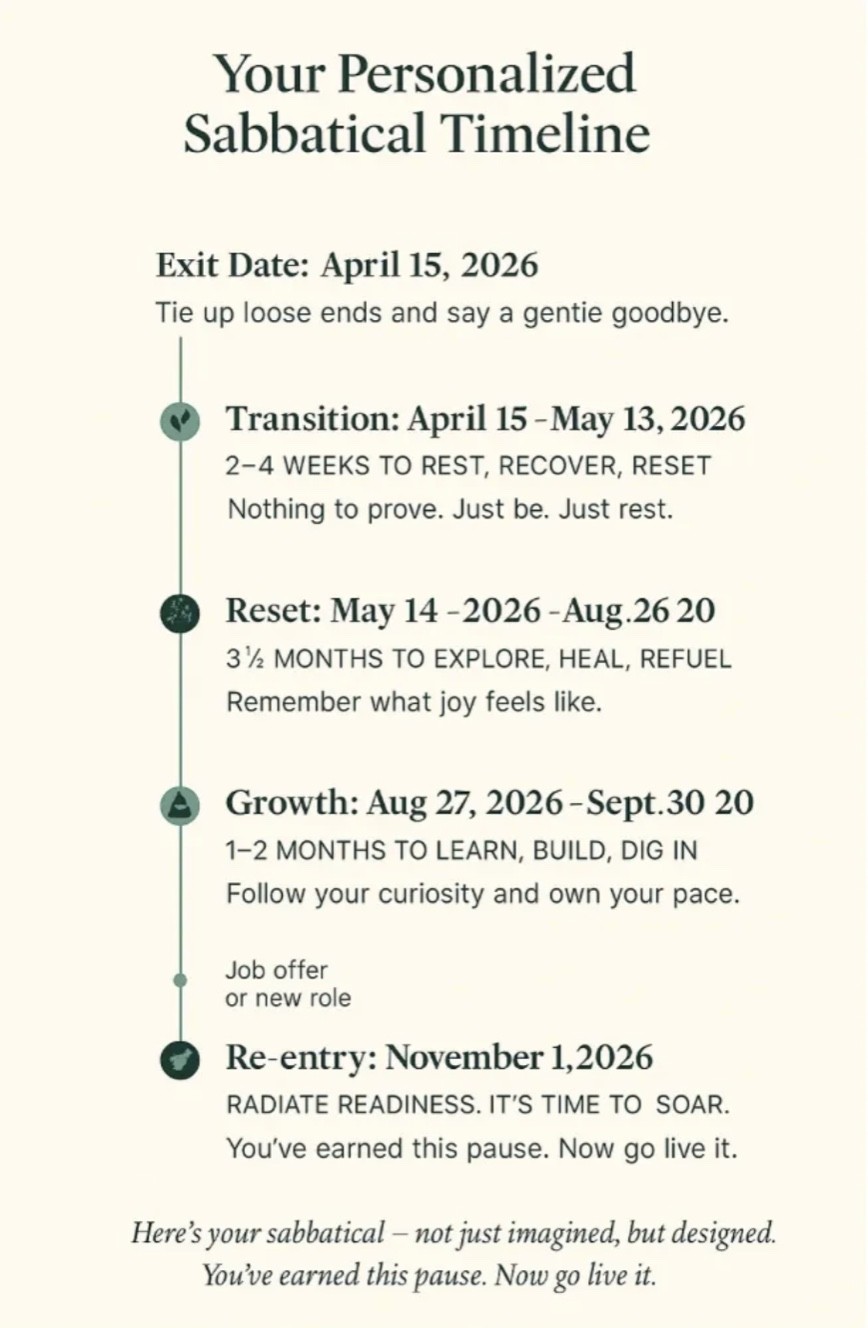
Potential V2 personalized output artifact
The Premise
How it was Built
The Innovation: Making Pausing Look Powerful
What Landed
What it Clarified
Closing Signal